

The short answer: Scrum organizes work into time-boxed sprints (usually one to two weeks) where the team commits to a fixed batch of work and ships at the end of each one. Kanban manages a continuous flow of work with explicit limits on how much can be in progress at once, no sprints required. Which one you should use comes down to how your work arrives: predictable, plannable work that fits into batches leans Scrum; unpredictable, always-incoming work that you cannot plan a week ahead leans Kanban. And plenty of teams blend the two, so do not treat this as a religious choice.
Let me break down what each one actually is, then give you a way to pick.
What Scrum actually is
Scrum is a cadence. You plan a sprint, the team commits to a set of work it believes it can finish, and then the sprint is protected: you do not pile new things in halfway through. At the end you have something shippable, you review it, you run a quick retrospective, and you plan the next one.
The structure comes with rituals: sprint planning, a short daily check-in, a review, and a retro. There are roles too, including someone owning the priorities and someone protecting the team's process. When the work is genuinely plannable, this rhythm is excellent. It creates a predictable heartbeat, it makes estimating timelines easier because you accumulate data on how much the team gets done per sprint, and it gives stakeholders a reliable "you'll see progress every two weeks."
The cost is the overhead. Scrum has real ceremony, and if your work does not fit neatly into sprint-sized boxes, you spend a lot of energy forcing it to. The other failure mode is the protected sprint becoming an excuse: a sprint commitment is not a license to let scope creep in through the side door under the banner of "it's small."
What Kanban actually is
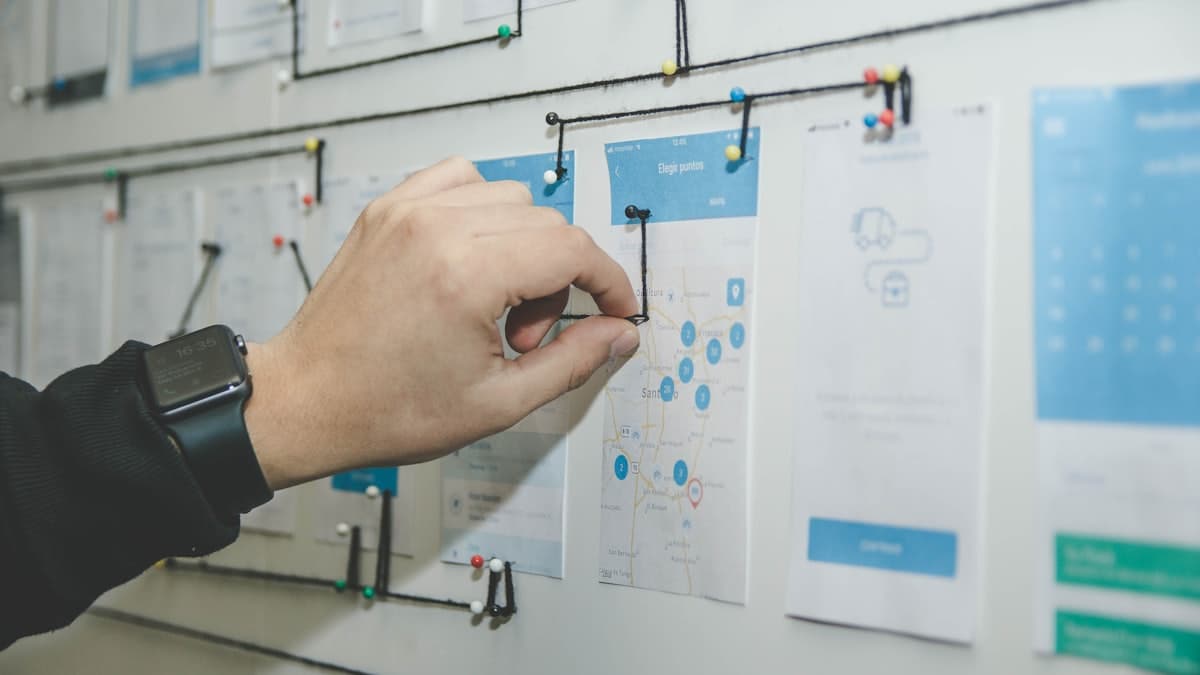
Kanban is a flow. You have a board with columns (a typical version: To Do, In Progress, Review, Done), and work moves left to right as it gets done. There are no sprints and no fixed commitment to a batch. The single most important rule, the one that makes Kanban Kanban and not just a board, is the work-in-progress limit: you cap how many items can sit in a given column at once.
That limit is the whole point. When In Progress is capped at, say, four, you cannot start a fifth thing until you finish one of the four. This forces the team to finish work instead of starting work, which is where most teams actually lose time. Stuff sitting half-done is the silent killer of throughput, and a WIP limit makes it impossible to hide.
Kanban shines when work arrives unpredictably and you cannot plan a tidy sprint: support queues, operations, a marketing team fielding incoming requests, anything where priorities shift day to day. It is also lighter to adopt, because you can layer it onto your existing process without reorganizing the team. The risk is that without the natural checkpoint a sprint provides, a loose Kanban team can drift, so you need to watch flow and keep the board honest.
How to actually pick
Ask how your work shows up.
- Plannable, batchable, comes from a backlog you control. Lean Scrum. You can prioritize a backlog into sprint-sized chunks and benefit from the rhythm.
- Unpredictable, interrupt-driven, priorities change daily. Lean Kanban. Sprint commitments will just get blown up by reality, and the WIP limit gives you the control instead.
- Some of each. Blend them, which most mature teams quietly do anyway.
That blend has a name in practice, and it is closer to how real teams operate than the textbook versions. Run sprint-style planning and retros for cadence, but cap work in progress on the board to keep flow healthy. Pull what works from each; ignore the dogma about doing one "properly."
A note on team shape: the methodology is the smaller variable. A focused, co-located team and a distributed hybrid team will both succeed or fail more on clarity and communication than on whether they chose sprints or flow. Pick the framework that reduces friction for how your people actually work, then adapt it.
The takeaway: Scrum is batches on a cadence, Kanban is continuous flow with WIP limits, and the right pick follows the shape of your incoming work. Start with whichever fits, keep what helps, drop what is just ceremony, and do not lose sleep over running a hybrid. The framework is a tool, not a belief system.